
Veterinary Advisor: Dogs Cats
Skyscape Medpresso IncMedical
4.45.00 Reviews
- Version
- 3.13.1
- Installs
- 10.00K
- Age Rating
- Everyone
Screenshots
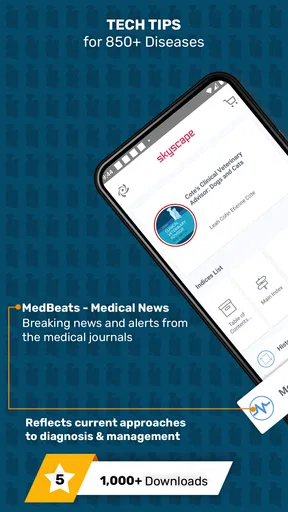
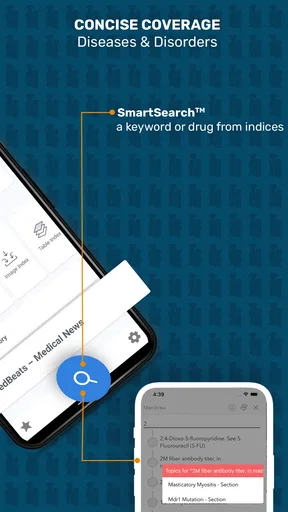

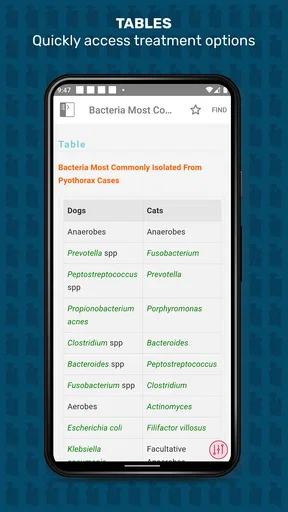
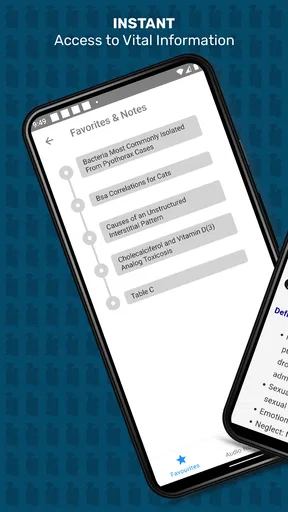
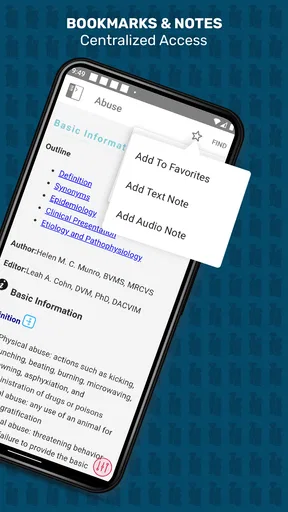
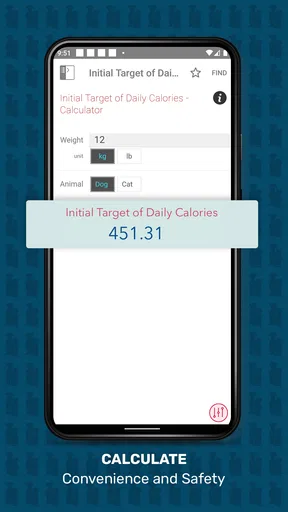
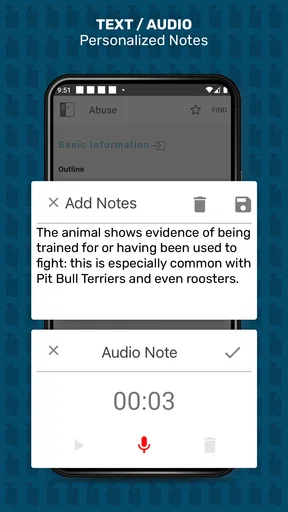
Our Review of Veterinary Advisor: Dogs Cats
 Analysis by Appyee
If you are a small-animal practitioner who wants a compact clinical reference rather than another general pet-care app, Veterinary Advisor: Dogs Cats is worth a close look. I found its purpose easy to understand: it is a medical reference from Skyscape Medpresso Inc., focused specifically on dogs and cats, and aimed at helping a busy veterinary professional move from a clinical question to a useful starting point without reaching for a large shelf of books.
The app is free to install, which makes trying it relatively low-risk, although some of the deeper content is offered through in-app purchases ranging from $69.99 to $89.99 per item. That distinction matters. I would not treat the free download as a complete replacement for a paid veterinary reference until I had checked exactly how much of the material was available in my own workflow.
What to expect from this veterinary reference
My first impression is that this is not designed to entertain pet owners or replace a consultation. Its audience is the person already working with animal patients and looking for organized clinical information during preparation, triage, discussion, or follow-up. The store summary calls it an indispensable resource for the busy small animal practitioner, and that description points in the right direction, provided you read “resource” as a reference tool rather than an automated diagnostic service.
The focus on dogs and cats gives the app a practical boundary. Instead of asking you to filter a broad human-medicine database or a general animal encyclopedia, you begin with the species most commonly seen in companion-animal practice. That narrow scope can save mental effort when the question is immediate. It also means the app will be less useful if your work regularly involves horses, farm animals, exotic pets, or wildlife.
I would approach it as a companion to professional judgement. A reference can help organize possibilities, remind you what to investigate, and support a conversation with a client or colleague. It cannot examine an animal, interpret the whole clinical picture on its own, or take responsibility for a treatment decision. The most sensible use is to consult it alongside the patient history, physical findings, diagnostic results, and local professional guidance.
The app has an average rating of 4.4 from around 57 ratings, with 10K+ installs. Those figures suggest that it has found a real audience, but they should not be mistaken for proof that every section will suit every clinic. A specialist reference is judged less by popularity than by whether its organization matches the questions you actually ask during a working day.
Who will benefit most
I think the strongest audience is a veterinary student, new graduate, general-practice veterinarian, veterinary nurse, or experienced clinician who wants a portable dog-and-cat reference close at hand. It can be especially useful when you are building a repeatable consultation routine and want to check a topic before speaking with a client.
For a first-time user, the best expectation is modest and practical: install it, explore how its material is arranged, identify the subjects you encounter most often, and test whether reaching those subjects feels quicker than searching through a physical textbook or a broad web search. That short trial tells you more than the store description does.
Pet owners should be more cautious about the fit. Even when medical explanations are readable, professional references can be easy to misinterpret without training. If you are a dog or cat owner looking for an explanation of a symptom, this is unlikely to be the most reassuring first stop. A conversation with a veterinarian is better for deciding what an individual animal needs.
Installing it without overcommitting
Veterinary Advisor: Dogs Cats is listed as free and suitable for Everyone, and it runs on Android 7.0 or later. The current version is 3.13.1. I would still treat installation as the beginning of an evaluation rather than the final purchasing decision, because the presence of paid items changes the value calculation for different users.
Before relying on it during a consultation, I would open the app when I have a few quiet minutes. Check whether the available material covers your usual cases, note how quickly the relevant sections open, and see whether the reading experience works comfortably on your phone or tablet. A reference that is excellent in content but awkward to navigate can slow you down at exactly the wrong moment.
It is also worth deciding where the app fits in your existing toolkit. If you already use a comprehensive veterinary library, this may work as a lighter companion for quick orientation. If you have no reference at all, it may give you a useful starting point, but I would not make a single mobile app the only source behind important clinical decisions.
Finding your first meaningful result
My recommended first session is not a random browse. Choose a familiar, non-urgent topic involving a dog or cat—something you already understand well enough to recognize whether the material is useful. Search or browse to that subject, read the opening section carefully, and pay attention to the way the app presents the information rather than only the facts themselves.
This is a valuable test because it reveals three things at once. First, you learn whether the vocabulary feels appropriate for your training. Second, you see whether the app helps you move from a broad concern toward a more structured clinical thought process. Third, you discover whether the screen layout supports quick consultation or encourages long, uninterrupted reading.
Once you find a useful passage, make a mental note of the route you took to reach it. In real practice, remembering the path can be more valuable than remembering one isolated detail. If a patient later presents with a similar concern, you will know whether to start with a broad subject, a species-specific entry, or another route through the reference.
A realistic example would be a busy afternoon appointment involving a cat whose signs are familiar but not yet clearly grouped into one problem. I would first gather the history and examination findings, then use the app to review the relevant clinical subject before explaining the next diagnostic step to the owner. The app’s role would be to sharpen my preparation and vocabulary, not to announce a diagnosis from a symptom alone.
That distinction is one of the most important practical insights here: use the app to organize a clinical question, not to outsource clinical responsibility. It is tempting to search for a single answer when time is short, but veterinary medicine rarely works that way. A reference is most helpful when it improves the questions you ask next.
A workflow that saves more time than random searching
I would divide use into three passes. Before the appointment, use the reference to refresh the subject and identify points worth checking. During the appointment, keep the patient’s actual findings in charge and consult only when the reference can clarify a specific issue. Afterward, return to the topic if you need to improve your explanation, prepare a follow-up, or compare what you observed with the broader clinical picture.
This three-pass approach avoids a common mistake: opening a reference in the middle of uncertainty and reading without a defined question. When that happens, even a well-structured medical app can become a tunnel of information. A short written prompt—“What do I need to confirm?”—can make the session much more efficient.
Another useful habit is to separate learning from urgent decision-making. Use the app during calm periods to become familiar with its organization. Then, when a time-sensitive case appears, you are not simultaneously learning the interface and trying to interpret medical content. That preparation is especially valuable for students and newer practitioners.
Where first-time users may get confused
The biggest point of confusion is likely to be the difference between a free installation and a complete free library. Because the app can be downloaded without an upfront charge, a new user may assume that every reference section is included. The in-app purchase range of $69.99 to $89.99 per item makes it important to inspect the available content before building your routine around it.
I would also avoid assuming that a search result is automatically a patient-specific recommendation. A reference entry may describe a condition, sign, or management consideration in a general way, while your patient may have complicating factors that change the appropriate response. Read the surrounding context instead of stopping at the first matching phrase.
Another source of friction is the temptation to compare the app with a web search as though they serve exactly the same purpose. A web search may be faster for a single definition, but it can return uneven quality and distracting results. A dedicated veterinary reference should be judged by consistency, relevance to dogs and cats, and how well it supports a repeatable workflow—not simply by whether it produces the first answer fastest.
Compared with a printed textbook, the app is more portable and easier to keep nearby, but a book can be more comfortable for sustained reading and broad study. Compared with a general veterinary database, this dog-and-cat focus may reduce irrelevant material, though a broader database could be preferable for mixed-species work or a clinician who needs a larger range of specialties in one place.
There is also a professional-language trade-off. The app’s medical focus is a strength when you already know the basic terminology, but it may feel dense if you are a pet owner or an early learner without guidance. In that situation, I would use it as a study aid alongside teaching from a veterinarian or instructor, not as a standalone explanation of what is happening to an animal.
How to decide whether paid content is worthwhile
I would make the purchase decision based on frequency, not curiosity. If you repeatedly work with dogs and cats and the included material becomes part of your preparation routine, a paid section may justify itself more easily than if you open the app only once every few months. The relevant question is not whether the content sounds useful in theory, but whether it removes a recurring obstacle in your actual day.
Try to identify a small set of recurring tasks before spending money. For example, do you need a quick refresher before consultations, a structured way to study common companion-animal topics, or a portable reference when you are away from your main workstation? If the answer is yes, test the free portion against those tasks first. If the app does not feel clear or efficient at that stage, paying for more material is unlikely to solve the underlying navigation problem.
I would also consider who is paying. For a student, the price of an individual item may be significant, so it makes sense to compare it with institutional library access, printed references, or another professional resource already available through a school or clinic. For a practitioner, the calculation may be different if the app saves preparation time across many appointments. Neither choice is automatically right; the value depends on use.
What I would do after the first session
After testing one familiar topic, I would create a personal shortlist of subjects worth revisiting. Not every reference needs to be read from beginning to end. The better approach is to learn where the material is strongest for your own caseload, then return to it with a specific purpose.
I would also compare one app-based consultation with the usual alternative I rely on. If my normal method is a printed book, I would time the steps mentally: finding the subject, locating the relevant passage, and returning to the patient’s question. If my normal method is online searching, I would compare not only speed but also how much filtering I need to do. This makes the decision concrete rather than emotional.
Keep a critical eye on convenience. A portable reference can encourage better preparation, but it can also encourage checking the screen when direct observation should come first. In a consultation, the animal, the owner’s account, and the examination remain primary. The app is most valuable when it supports those sources instead of competing with them.
For students and new graduates, I would use the app to build a habit of asking better follow-up questions: What finding would change my concern? Which part of the history matters most? What should I explain clearly to the owner? Those questions turn a reference from a passive reading tool into part of a learning workflow.
For experienced practitioners, the benefit is more selective. You may already have preferred references and established routines, so the app needs to earn its place by being convenient for the dog-and-cat cases you see most often. If it duplicates a resource you already know well, the free installation may still be useful as a comparison, but there is no reason to force it into your practice.
My recommendation for different users
I would recommend trying it if you work primarily with companion animals and want a focused mobile reference from an established medical-app developer. The free entry point makes exploration reasonable, and the dog-and-cat scope is more practical for small-animal work than a resource built around unrelated species.
I would be less enthusiastic for someone seeking a simple symptom checker, a pet-owner education app, or a complete all-species library. Those needs call for different tools. I would also skip making it a central resource if you dislike reading professional medical material on a phone or if your work depends heavily on species outside dogs and cats.
Overall, my view is positive but deliberately measured. Veterinary Advisor: Dogs Cats makes the most sense as a focused companion for clinical preparation, study, and quick orientation. Its strongest quality is the match between its subject area and the everyday needs of small-animal practice. Its main friction is the gap between a free download and content that may require substantial paid purchases, along with the usual risk of treating reference material as a diagnosis.
With the right expectations, I would install it, test one familiar topic, and judge it by the time it saves and the clarity it adds. If that first successful search helps me prepare a better question, explain a case more clearly, or return to a subject without opening several unrelated sources, the app has earned a place in my toolkit. If it does not, a trusted textbook or broader veterinary reference may be the better investment.
Verdict
Strengths of Veterinary Advisor: Dogs Cats
- Covers common dog and cat health concerns in one place.
- Useful symptom guidance before contacting a veterinarian.
- Simple layout makes information easy to browse.
- Helpful for new pet owners learning basic care.
- Works as a convenient reference during routine pet care.
Limitations of Veterinary Advisor: Dogs Cats
- It cannot replace a professional veterinary diagnosis.
- Some advice may not apply to unusual breeds or conditions.
- Medical information may require updates over time.
- Emergency cases still require immediate veterinary attention.
- The amount of content may feel limited for experienced owners.
Other Releases by Skyscape Medpresso Inc
View All
Saunders Comp Review NCLEX PN
Medical4.6

Lippincott Review for NCLEX-PN
Medical4.7

Board Review Series-Pathology
Medical0.0

CURRENT Dx Tx Psychiatry
Medical4.3
Similar Picks in This Category
View All
WebMD: Symptom Checker
WebMD, LLC4.1

Microphone Amplifier
DOSA Apps4.2

Anatomy Learning - 3D Anatomy
3D Medical OU4.5

Period Tracker and Calendar
SimpleInnovation4.9

GoodRx: Prescription Coupons
GoodRx4.8

CVS Health
CVS Pharmacy4.5
Frequently Asked Questions
What is Veterinary Advisor: Dogs Cats used for?
Veterinary Advisor: Dogs Cats is an educational reference app designed to help pet owners find general information about common health conditions affecting dogs and cats. It may explain symptoms, possible causes, care considerations, and veterinary terminology in an accessible format. It should be treated as a source of background information, not as a replacement for a professional examination or personalized veterinary diagnosis.
Can Veterinary Advisor: Dogs Cats diagnose my pet or recommend treatment?
No. The app can help you understand health topics and prepare useful questions for your veterinarian, but it cannot examine your pet, interpret every symptom in context, or provide a reliable individualized diagnosis. Treatment decisions should always be made with a qualified veterinary professional. Avoid giving medication, changing dosages, or delaying care based only on information found in the application.
Does the app cover both dogs and cats?
Yes, Veterinary Advisor: Dogs Cats is intended to provide reference material for both species. However, dogs and cats can show different symptoms, react differently to medicines, and have very different nutritional and medical needs. When reading an entry, make sure the information applies to your pet’s species, age, size, and condition, and confirm anything important with a veterinarian.
Is the information suitable for emergencies?
The app should not be relied upon as an emergency service. If your dog or cat is having difficulty breathing, has collapsed, is bleeding heavily, may have been poisoned, is suffering seizures, cannot urinate, or appears to be in severe pain, contact an emergency veterinary clinic immediately. Use the app only as a general reference while seeking professional help, never as a reason to postpone urgent treatment.
What should I check before downloading and using the app?
Before downloading Veterinary Advisor: Dogs Cats, review its store listing for the current version, developer information, supported devices, permissions, privacy details, and whether any features require payment or an internet connection. After installation, check how recently the content was updated and remember that veterinary guidance can change. For dependable care, use the app alongside regular checkups and advice from your own veterinarian.
